
Togo: the Siberian Husky who led the 1925 serum run
If you have a dog who loves the cold, you might enjoy the story of Togo. See the real story – guest starring your dog.
Togo was a Siberian Husky who led musher Leonhard Seppala's team on the longest and most dangerous leg of the 1925 serum run to Nome, Alaska. He was 12 years old at the time and covered about 261 miles, far more than any other team in the relay. His story stayed in the shadow of another dog, Balto, for decades.
What is TimeWalkies?
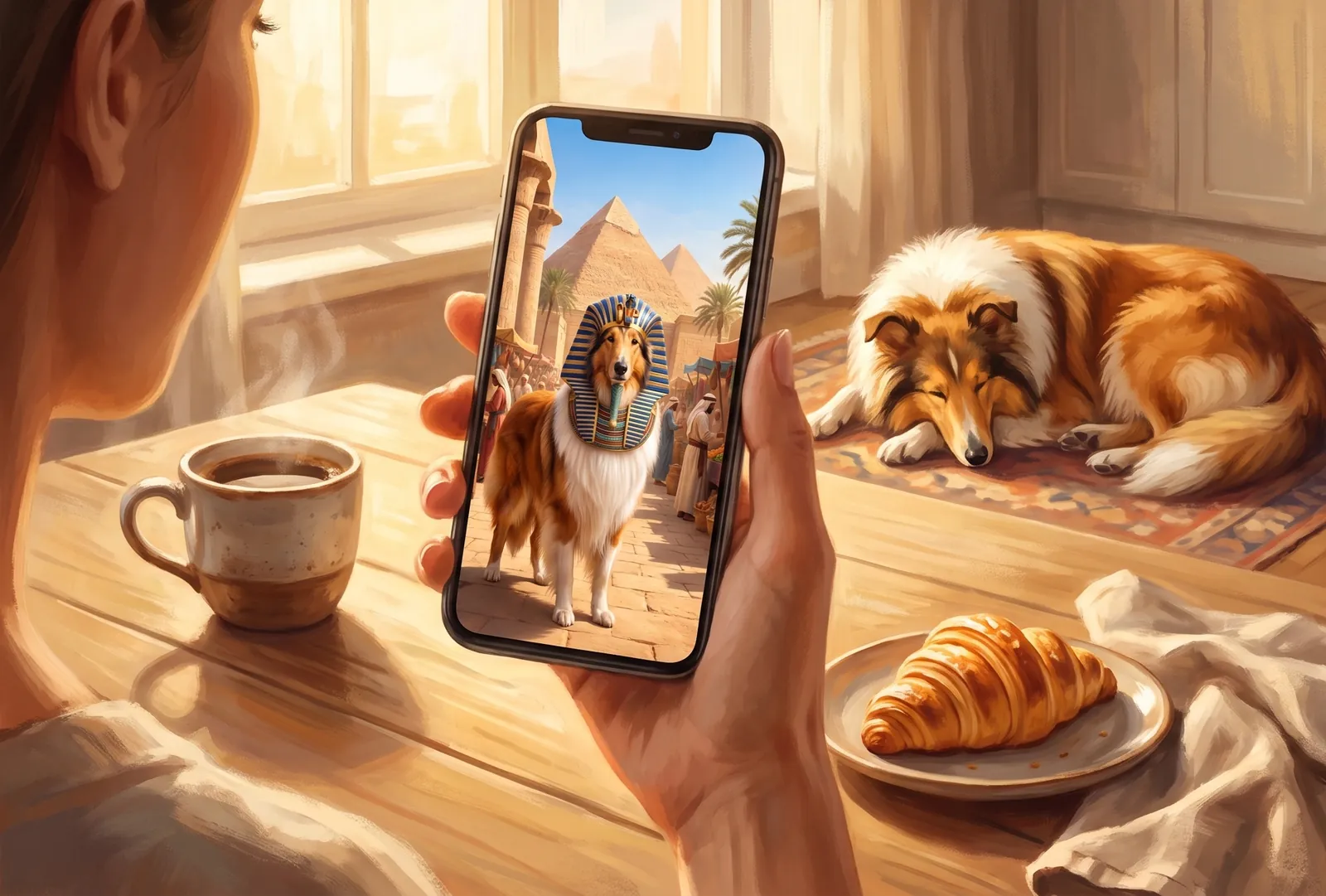
TimeWalkies paints your dog into a famous moment from history and sends it as a postcard. A new place and time every morning.
How TimeWalkies works
 Choose a photo of your dog.
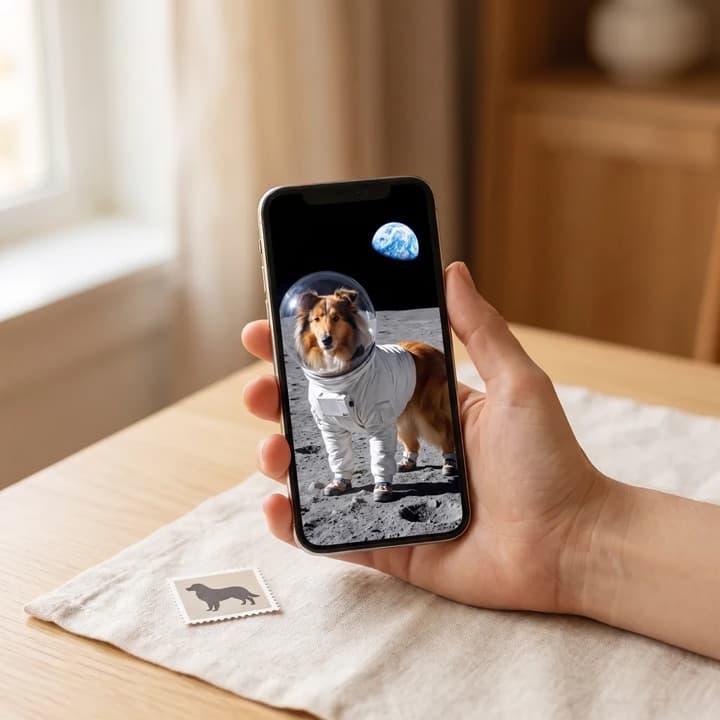 You get your first TimeWalkies postcard immediately!
 Then you get another one for free.
 If you like them, keep them coming every day for $99 for a whole year (about 27¢ per day, one‑off payment, no auto‑renewal).
2 free postcards. No credit card.
The story in 5 parts
A short version first. The full story, with every detail, is further down.
Part 1
Why Nome needed a serum run
In the winter of 1924 and 1925, Nome's only doctor, Curtis Welch, found that the town's supply of diphtheria antitoxin had expired.
Part 2
Togo's early life
Togo was born around 1913 and belonged to Leonhard Seppala, a Norwegian musher who bred and raced Siberian Huskies in Nome.
Part 3
The longest, most dangerous leg
When the serum relay was organized, Seppala was assigned the longest and most difficult portion of the route, which crossed the frozen Norton Sound.
Part 4
Togo compared with Balto
Balto, another Siberian Husky from Seppala's kennel, led the final and much shorter leg of the relay into Nome, covering about 55 miles.
Part 5
What happened to Togo afterward
Togo retired in Poland Spring, Maine, and was euthanized there at the age of 16.
Read the full story
Part 1
Why Nome needed a serum run
In the winter of 1924 and 1925, Nome's only doctor, Curtis Welch, found that the town's supply of diphtheria antitoxin had expired. By mid-January 1925 he had diagnosed diphtheria in a three-year-old boy, and more cases followed within weeks. Diphtheria is a contagious bacterial infection that can suffocate patients if it is not treated. Nome was icebound and cut off from ships for the winter, and planes of the era could not fly safely in the extreme cold, so officials turned to dog sled teams to bring antitoxin from the railhead at Nenana. You can imagine how much pressure rested on the dogs chosen for the relay.
Part 2
Togo's early life
Togo was born around 1913 and belonged to Leonhard Seppala, a Norwegian musher who bred and raced Siberian Huskies in Nome. As a puppy he had a painful throat problem, and Seppala initially gave him away to a friend to be a pet. Togo escaped that home by jumping through a window and made his way back to Seppala's kennel. At about eight months old he was harnessed for the first time and ran 75 miles on his first day, an unusual distance for such a young dog. He soon became Seppala's regular lead dog and helped him win the All-Alaska Sweepstakes race in 1915, 1916 and 1917.
Part 3
The longest, most dangerous leg
When the serum relay was organized, Seppala was assigned the longest and most difficult portion of the route, which crossed the frozen Norton Sound. He and his team, with Togo leading, traveled more than 300 miles out from Nome to meet the relay, then turned back with the serum. On the return trip, Seppala took a shortcut across the ice of Norton Sound to save time, even though the ice could break up without warning. Togo's judgment helped guide the team safely across just hours before the ice broke apart. If you have ever trusted your own dog's instincts on a walk, you will understand why mushers depended so heavily on their lead dogs. By the time Togo handed off the serum, he had covered about 261 miles, the longest distance of any dog in the relay.
Part 4
Togo compared with Balto
Balto, another Siberian Husky from Seppala's kennel, led the final and much shorter leg of the relay into Nome, covering about 55 miles. Seppala felt that Togo deserved more credit, and he said publicly that he never had a better dog than Togo. Over time, historians gave Togo more recognition, including a statue in New York's Seward Park in 2001. If your own dog ever gets overlooked for a flashier housemate, you might feel for Seppala's frustration on Togo's behalf.
Part 5
What happened to Togo afterward
Togo retired in Poland Spring, Maine, and was euthanized there at the age of 16. After his death, Seppala had him mounted, and his remains have been displayed at museums in Vermont and Alaska. His skeletal remains are held by the Peabody Museum of Natural History at Yale University.
- Togo was a Siberian Husky, born around 1913, owned by musher Leonhard Seppala.
- He led the longest single leg of the 1925 serum run, covering roughly 261 miles.
- He crossed the frozen Norton Sound safely just hours before the ice broke up.
- He was 12 years old during the serum run.
Things you might not know
- Togo escaped that home by jumping through a window and made his way back to Seppala's kennel.
- Togo's judgment helped guide the team safely across just hours before the ice broke apart.
- Over time, historians gave Togo more recognition, including a statue in New York's Seward Park in 2001.
Year by year
- 1913Togo was born around 1913 and belonged to Leonhard Seppala, a Norwegian musher who bred and raced Siberian Huskies in Nome.
- 1915He soon became Seppala's regular lead dog and helped him win the All-Alaska Sweepstakes race in 1915, 1916 and 1917.
- 1924In the winter of 1924 and 1925, Nome's only doctor, Curtis Welch, found that the town's supply of diphtheria antitoxin had expired.
- 1925By mid-January 1925 he had diagnosed diphtheria in a three-year-old boy, and more cases followed within weeks.
- 2001Over time, historians gave Togo more recognition, including a statue in New York's Seward Park in 2001.
Questions people ask
Was Togo a real dog?
Yes, Togo was a real Siberian Husky owned by musher Leonhard Seppala in Nome, Alaska.
How far did Togo run during the serum run?
Togo led his team across about 261 miles, the longest single leg covered by any dog in the relay.
Why is Balto more famous than Togo?
Balto led the final, shorter leg into Nome and received most of the newspaper coverage and a statue in Central Park soon afterward. Seppala felt this overlooked Togo's much longer and more dangerous run.
What breed was Togo?
Togo was a Siberian Husky, a breed developed by the Chukchi people of Siberia for sled pulling.
What happened to Togo after the serum run?
Togo retired in Maine and was euthanized there at age 16. His mounted remains have since been displayed at museums, and his skeleton is held at Yale's Peabody Museum.
Your first 2 postcards are free, with no credit card. After that, it is $14.99 a month, or a one-time $99 Year Pass for 365 days. Give TimeWalkies as a gift.
Sources
- Siberian Husky - Wikipedia. en.wikipedia.org.
- 1925 serum run to Nome - Wikipedia. en.wikipedia.org.
- The Great Serum Run and Balto. www.cmnh.org.
- The 1925 Serum Run to Nome | Alaska Mushing School. Alaska Mushing School.
- Togo (U.S. National Park Service). www.nps.gov.
- Balto and Togo, Two Great Sled Dogs. America Comes Alive, Sep 16, 2021.
- The True Story of Togo: Siberian Husky Sled Dog Hero of 1925 Nome Serum Run. American Kennel Club.
- This Heroic Dog Raced Across the Frozen Alaskan Wilderness to Deliver Life-Saving Medicine—but His Contributions Were Long Overlooked. Smithsonian Magazine.
- Balto - Wikipedia. en.wikipedia.org.
- When an icebound town faced an outbreak, these dogs became heroes. www.abc.net.au, Feb 2, 2026.
Written by TimeWalkies EditorialLast updated How we research