
What were corgis bred for? The cattle-herding job behind the breed
See the real story – guest starring your dog.
If you share your home with a corgi, you already know how they love to trail you around the house. Corgis were bred to herd cattle in Wales, nipping at the animals' heels to keep them moving. Two separate breeds are recognized: the Pembroke and the Cardigan Welsh Corgi.
What is TimeWalkies?
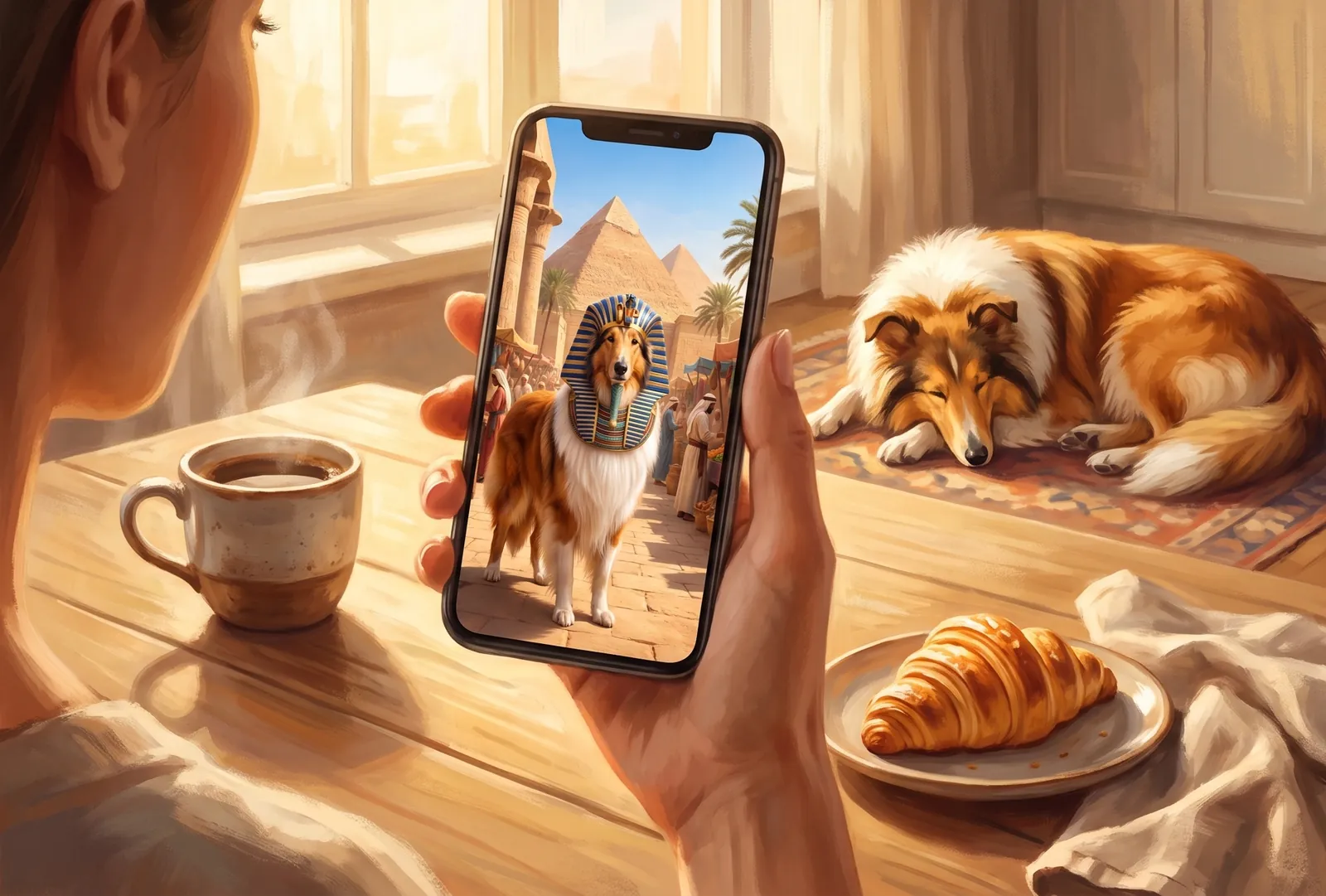
TimeWalkies paints your dog into a famous moment from history and sends it as a postcard. A new place and time every morning.
How TimeWalkies works
 Choose a photo of your dog.
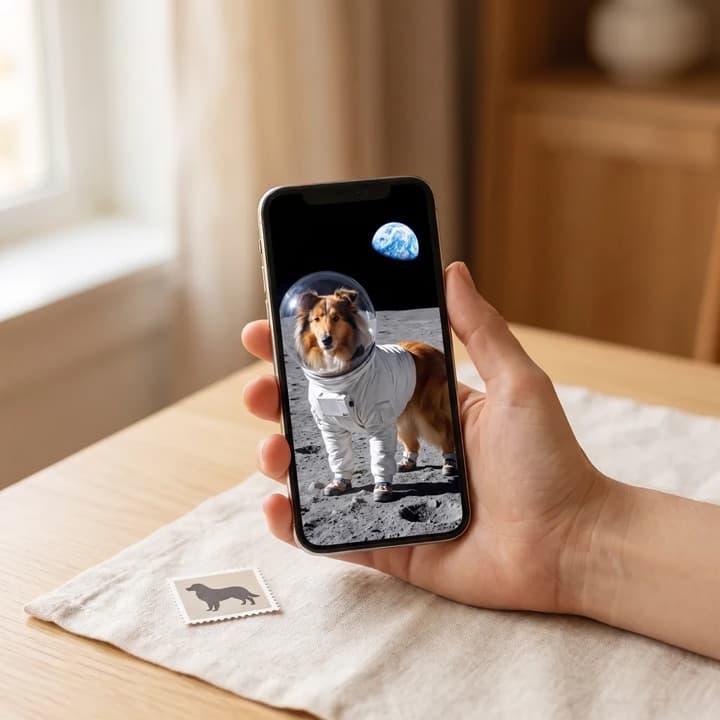 You get your first TimeWalkies postcard immediately!
 Then you get another one for free.
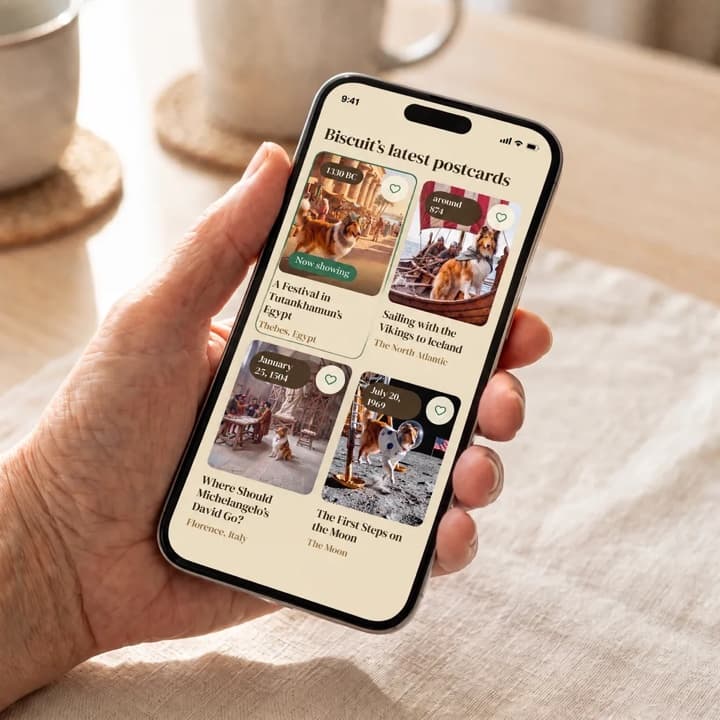 If you like them, keep them coming every day for $99 for a whole year (about 27¢ per day, one‑off payment, no auto‑renewal).
2 free postcards. No credit card.
The story in 5 parts
A short version first. The full story, with every detail, is further down.
Part 1
The short answer: cattle droving in Wales
Welsh Corgis were cattle herding dogs, a type known as heelers, because they nipped at the heels of much larger animals to keep them on the move.
Part 2
Pembroke vs Cardigan corgi: two separate working histories
If you own one corgi, it helps to know there are actually two breeds behind that word.
Part 3
How heeling work shaped the corgi body
Their short legs and low, long body let them work close to the cattle they were driving while avoiding kicks.
Part 4
From farm dog to royal companion
You might wonder how a working farm dog ended up in royal palaces.
Part 5
What corgi herding instincts look like in a pet dog today
If your corgi nips at your ankles, that behavior has a history.
Read the full story
Part 1
The short answer: cattle droving in Wales
Welsh Corgis were cattle herding dogs, a type known as heelers, because they nipped at the heels of much larger animals to keep them on the move. That is a different job from the sheepdogs you might picture herding a flock across a hillside. Pembroke corgis escorted cows to common grazing land, watched over them, and made sure they were back home in time for milking.
Their build made this work possible. The combination of their low height off the ground and their agility let them avoid the hooves of cattle they were driving. Two distinct breeds developed to do this same kind of work in different parts of Wales: the Pembroke Welsh Corgi and the Cardigan Welsh Corgi.
Part 2
Pembroke vs Cardigan corgi: two separate working histories
If you own one corgi, it helps to know there are actually two breeds behind that word. The Cardigan Welsh Corgi is considered one of the oldest breeds in the British Isles, with ancestors brought to Wales by Celtic tribes from central Europe around 1200 BC. Cardigans descended from the Teckel family of dogs, the same lineage that produced the Dachshund.
The Pembroke Welsh Corgi belongs to the Spitz family instead, related to dogs like the Swedish Vallhund and Norwegian Buhund. One account attributes the Pembroke's arrival to Flemish weavers coming to Wales starting around the 10th century, while another ties the Cardigan to Norse settlers. Sources do not agree on which story is correct, so it is fair to say both origin stories exist for how the Pembroke reached Wales.
For a long stretch, the two types were not kept apart. Pembrokes and Cardigans were shown together as one breed by the Kennel Club starting in the 1920s, and the two varieties were bred together for about a decade before that changed. In 1934, the Kennel Club recognized the Pembrokeshire Corgi as a breed separate from the Cardiganshire Corgi, and the American Kennel Club recognized the Cardigan the following year.
Part 3
How heeling work shaped the corgi body
Their short legs and low, long body let them work close to the cattle they were driving while avoiding kicks. This style of herding meant nipping at the animals' heels to keep them moving. The Cardigan's large, sensitive ears also let it hear an approaching kick from a cow so it could roll out of the way using its long body and short legs.
Part 4
From farm dog to royal companion
You might wonder how a working farm dog ended up in royal palaces. King George VI brought home a Pembroke Welsh Corgi named Dookie in 1933, and Princess Elizabeth received her own corgi, Susan, as an 18th birthday gift in 1944. Elizabeth II went on to own more than 30 corgis over her reign, and the breed became famous as her preferred breed. By the early 1900s, hill farmers had increasingly switched from cattle to sheep, and corgis were not suited to herding sheep, so their original job was disappearing anyway.
As the breed's farm work faded, its role shifted toward companionship and the show ring. Modern-day corgis are rarely asked to herd cattle, but their intelligence and energy now show up in conformation, obedience, agility, and other dog sports instead of pasture work.
Part 5
What corgi herding instincts look like in a pet dog today
If your corgi nips at your ankles, that behavior has a history. The herding instinct can cause younger Pembrokes to nip at their owners' ankles, since that is exactly what they were bred to do with cattle.
Questions people ask
What were corgis originally bred for?
Corgis were bred to herd cattle in Wales by nipping at their heels to keep them moving to grazing land or home for milking. Their low bodies and short legs let them dodge kicks while working close to the animals.
Are Pembroke and Cardigan corgis the same breed?
No, they are two separate breeds with different origins, even though they share the name Welsh Corgi. The Cardigan descends from Teckel-type dogs related to the Dachshund, while the Pembroke belongs to the Spitz family.
Why do corgis have short legs?
Their short legs and long, low bodies let them work close to the ground and stay near the cattle they were driving. This build, along with their agility, helped them avoid being kicked while nipping at heels.
Do corgis still have herding instincts today?
They also remain alert and vocal watchdogs, a trait tied to their working background.
Why did corgis become popular with British royalty?
King George VI brought home a corgi named Dookie in 1933, and Princess Elizabeth received her own corgi, Susan, in 1944. Elizabeth II went on to own more than 30 corgis, and her lifelong fondness for the breed helped make Pembrokes widely popular.
Your first 2 postcards are free, with no credit card. After that, it is $14.99 a month, or a one-time $99 Year Pass for 365 days. Give TimeWalkies as a gift.
Sources
- Pembroke Welsh Corgi History: From Centuries-Old Cattle Herder to Family Pet. American Kennel Club.
- Royal corgis - Wikipedia. en.wikipedia.org.
- Meet Two Similar Yet Different Breeds: The Cardigan Welsh Corgi and the Pembroke Welsh Corgi. American Kennel Club.
- Pembroke Welsh Corgi - Wikipedia. en.wikipedia.org.
- Welsh Corgi - Wikipedia. en.wikipedia.org.
- Frequently Asked Questions – The Cardigan Welsh Corgi Club of America. cardigancorgis.com.
- Cardigan Welsh Corgi Facts You May Not Know. American Kennel Club.
- Cardigan Welsh Corgi - Wikipedia. en.wikipedia.org.
- Pembroke Welsh Corgi Club of America - Brief History. pwcca.org.
- Our Guide To The Two Corgi Types: Pembroke & Cardigan. Doggy & Pooch, Oct 17, 2023.
- Queen Elizabeth II's Royal Pembroke Welsh Corgis. American Kennel Club.
Written by TimeWalkies EditorialLast updated How we research