
Dogs in Heian Japan: companions, courts, and culture
See the real story – guest starring your dog.
You're about to meet the dogs of Heian Japan, the court world Sei Shonagon wrote about a thousand years ago. One dog, Okinamaro, was set on the emperor's cat and later returned to court pretending not to be himself.
What is TimeWalkies?
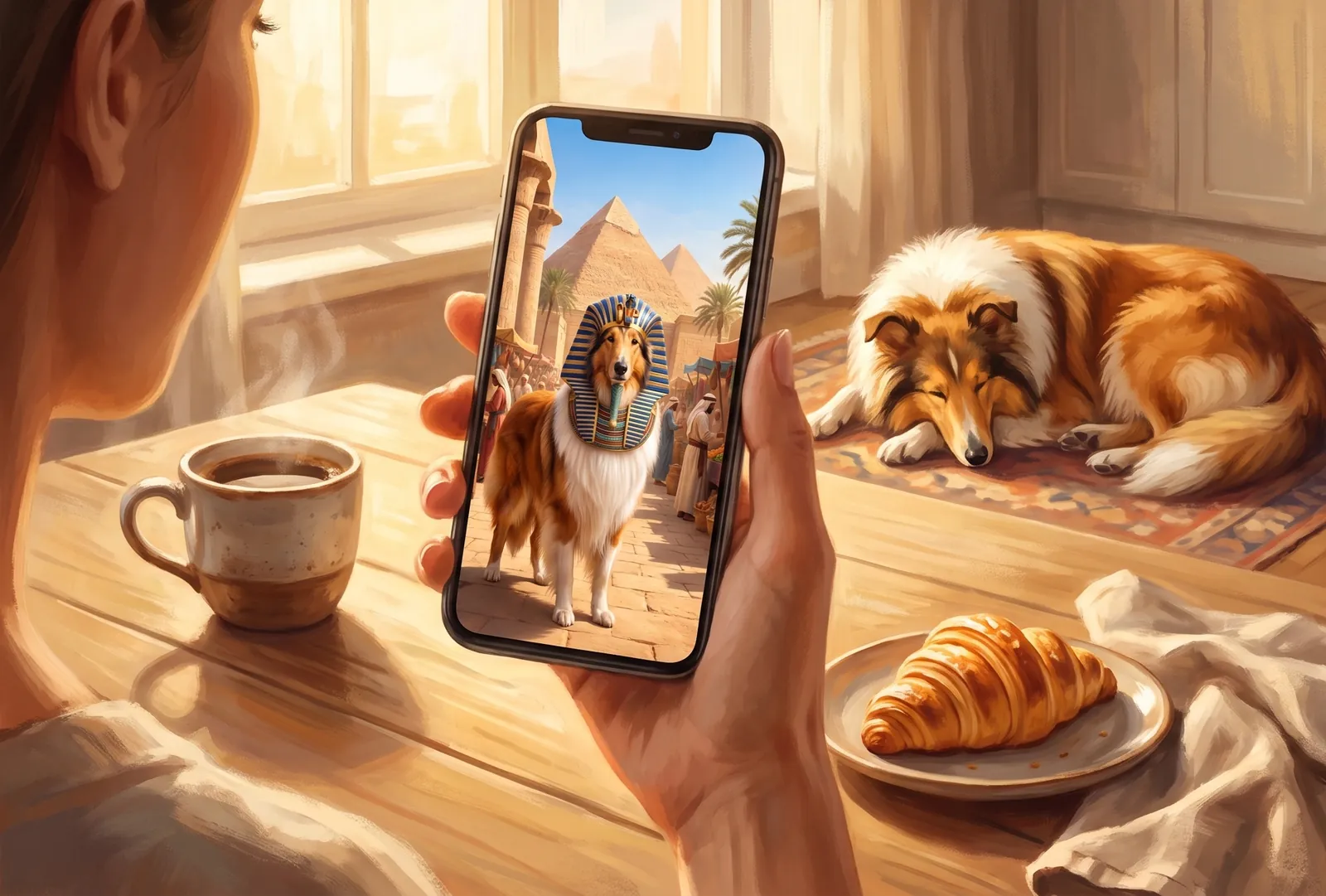
TimeWalkies paints your dog into a famous moment from history and sends it as a postcard. A new place and time every morning.
How TimeWalkies works
 Choose a photo of your dog.
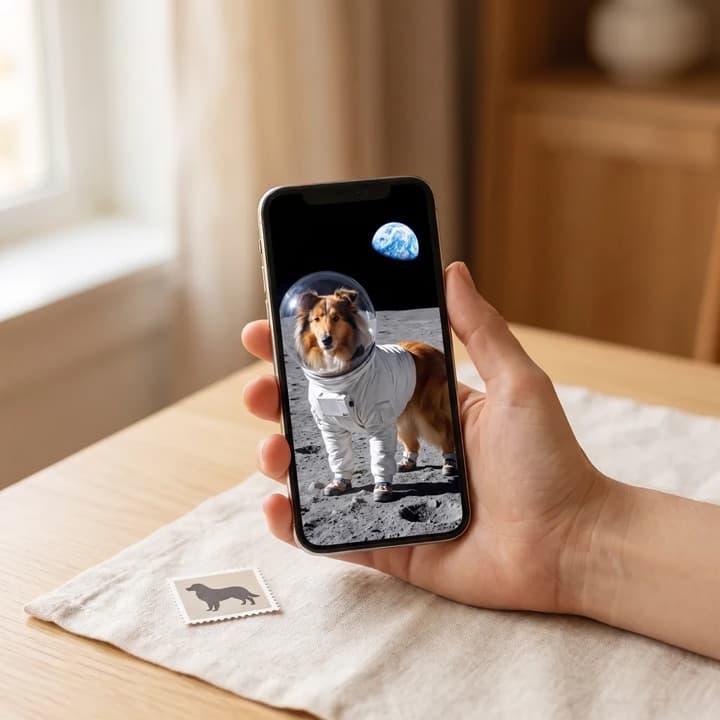 You get your first TimeWalkies postcard immediately!
 Then you get another one for free.
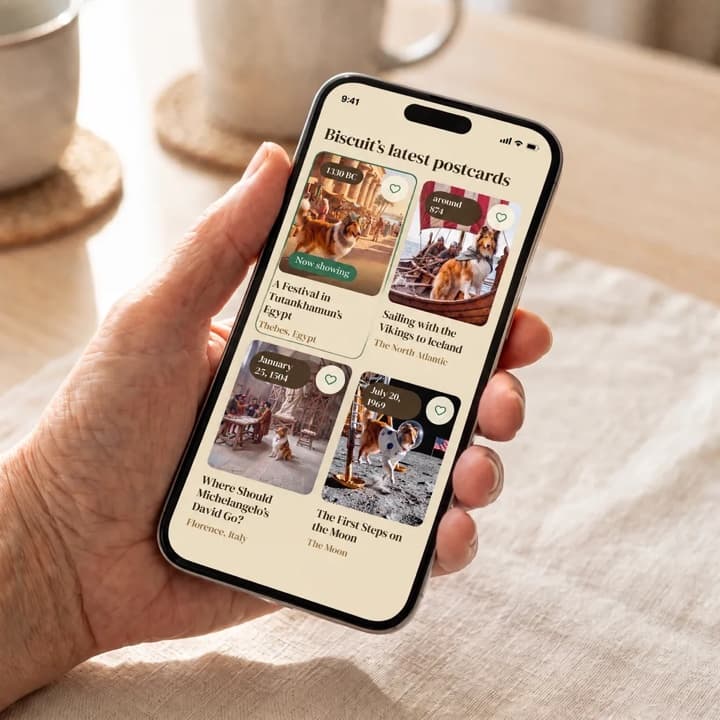 If you like them, keep them coming every day for $99 for a whole year (about 27¢ per day, one‑off payment, no auto‑renewal).
2 free postcards. No credit card.
The story in 4 parts
A short version first. The full story, with every detail, is further down.
Part 1
Court life at the start of the Heian period
The Heian period ran from 794 to 1186.
Part 2
The story of Okinamaro in the Pillow Book
One dog story from this period comes from The Pillow Book, Sei Shonagon's collection of court anecdotes.
Part 3
What the story reveals about dogs and status
Sei Shonagon wrote that the scene struck her as strange and moving, and that she still cried when people brought it up.
Part 4
What we know and do not know about Heian-era dog breeds
The Shiba Inu is one of Japan's original hunting dog breeds, used to flush game in mountainous terrain.
Read the full story
Part 1
Court life at the start of the Heian period
The Heian period ran from 794 to 1186. Sei Shonagon joined the court of Empress Teishi in 993, when she was in her late twenties. Teishi had become an empress in 990, at just fourteen years old, when her father was named regent to the young emperor. Court life was competitive and precarious, and a person's fortune could rise or fall with the emperor's favor. If you have ever worried about how your own dog would fare in a strange new place, the court was not so different for the animals that lived there.
Teishi's position was already slipping by the time Shonagon arrived at court. Her father, the regent, died in 995, and two of her brothers were exiled that same year. The Pillow Book itself began to circulate at court around 995 to 996, not long before Teishi died at twenty-three, after which Shonagon, by then a widow of forty, left the palace.
Part 2
The story of Okinamaro in the Pillow Book
One dog story from this period comes from The Pillow Book, Sei Shonagon's collection of court anecdotes. The emperor's cat, who had been given the headdress of nobility and the name Lady Myobu, was resting on the veranda when a gentlewoman set a dog named Okinamaro on her. The startled cat ran to the emperor, who ordered two officials to beat Okinamaro and banish him from the palace grounds. Dog Island, where the dog was sent, was probably a refuge for unwanted dogs rather than a formal punishment site.
- A few days later a battered, swollen dog wandered into the court, but no one recognized him.
- The empress and her ladies were mourning Okinamaro's fate when the strange dog began to shake and weep at the sound of his name.
- They realized the trembling dog was Okinamaro, who had refused to answer to his name to keep from betraying himself.
You might recognize this scene if your own dog has ever gotten into trouble with another household animal and then hidden out of fear.
Part 3
What the story reveals about dogs and status
Sei Shonagon wrote that the scene struck her as strange and moving, and that she still cried when people brought it up. She recalled that Okinamaro used to swagger about happily, wearing a garland of peach blossoms at festivals, before his fall from favor. Court accounts like hers suggest that women, who spent much of their time indoors with their companions, felt more tenderness toward pets than men generally did.
Part 4
What we know and do not know about Heian-era dog breeds
The Shiba Inu is one of Japan's original hunting dog breeds, used to flush game in mountainous terrain.
Questions people ask
What is the Heian period in Japanese history?
The Heian period ran from 794 to 1186 CE. Sei Shonagon, author of The Pillow Book, served at the imperial court in the 990s. Sei Shonagon, author of The Pillow Book, served at that court in the 990s.
What does the Pillow Book say about dogs?
It tells the story of Okinamaro, a palace dog beaten and banished after startling the emperor's cat, who later returned in disguise and was pardoned once he was recognized. Sei Shonagon wrote that the scene struck her as strange and moving, and that she still cried when people brought it up.
Were dogs kept as pets in Heian Japan?
Court women in particular seem to have felt real tenderness toward pets, more so than men generally did.
How were dogs viewed in Japanese Buddhism at the time?
In the story, the cat is treated as noble while the dog is beaten and cast out, which reflects how cats were seen as holy and dogs as lower class in old Japan.
Your first 2 postcards are free, with no credit card. After that, it is $14.99 a month, or a one-time $99 Year Pass for 365 days. Give TimeWalkies as a gift.
Sources
- Full text of "The Pillow Book". archive.org.
- Rivka Galchen · Shonagon is hot:. London Review of Books, Dec 22, 2019.
- The Subtle Interrogation of Power in The Pillow Book. Ploughshares.
- The Pillow Book of Sei Shōnagon, edited by Ivan Morris (chapter 8). Issuu.
- LitCharts. LitCharts.
- The Pillow Book | English 2800 and the Blog of Recollection (JMWD, Spring 16). blogs.baruch.cuny.edu.
- Shiba Inu - Wikipedia. en.wikipedia.org.
Written by TimeWalkies EditorialLast updated How we research