
Dogs in medieval warfare: what the historical record shows
You might wonder whether a dog like yours ever marched off to war. See the real story – guest starring your dog.
Archaeologists suspect people have used dogs in warfare since dogs were first domesticated, more than 15,000 years ago. The story runs from ancient Lydia to the trenches of the First World War.
What is TimeWalkies?
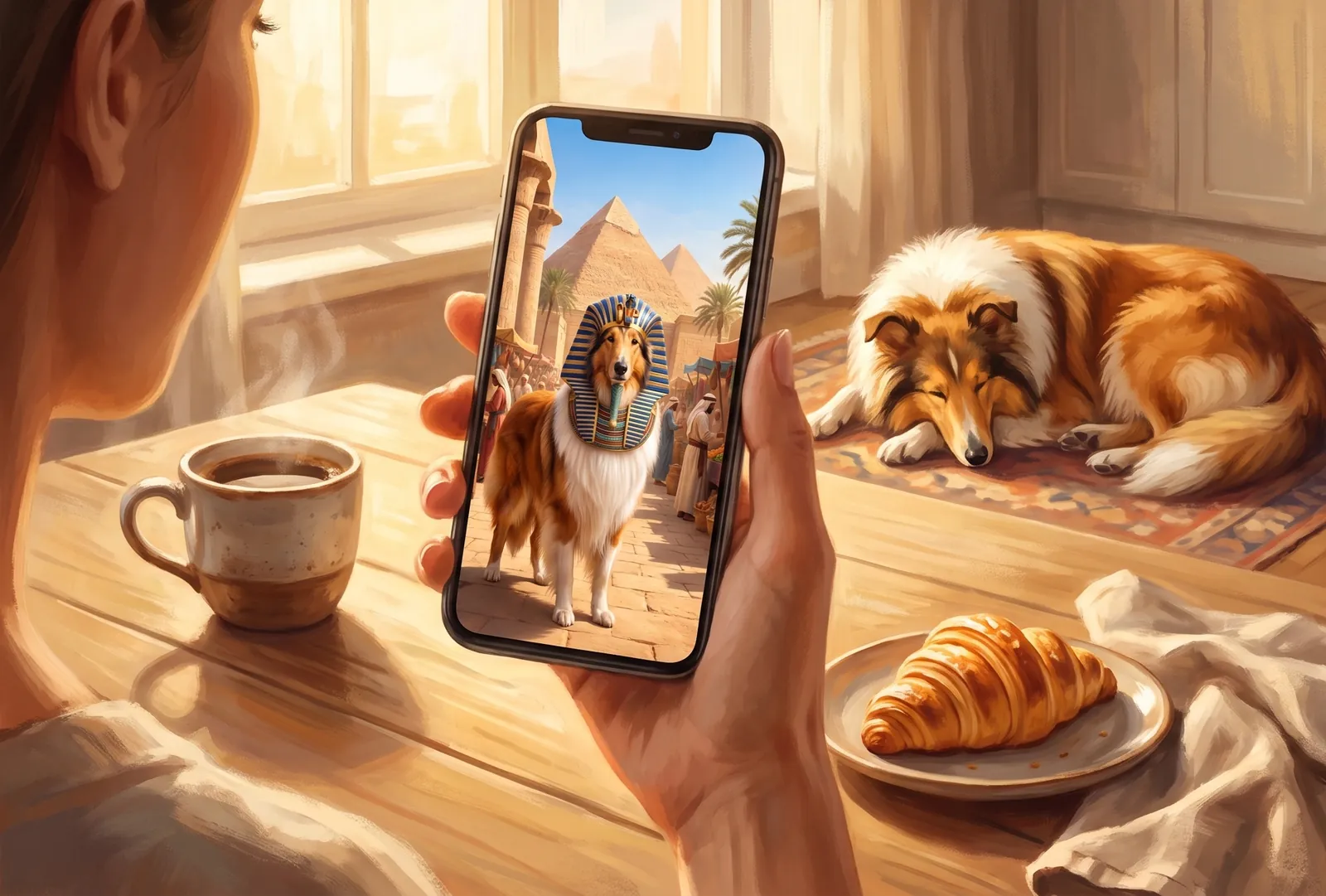
TimeWalkies paints your dog into a famous moment from history and sends it as a postcard. A new place and time every morning.
How TimeWalkies works
 Choose a photo of your dog.
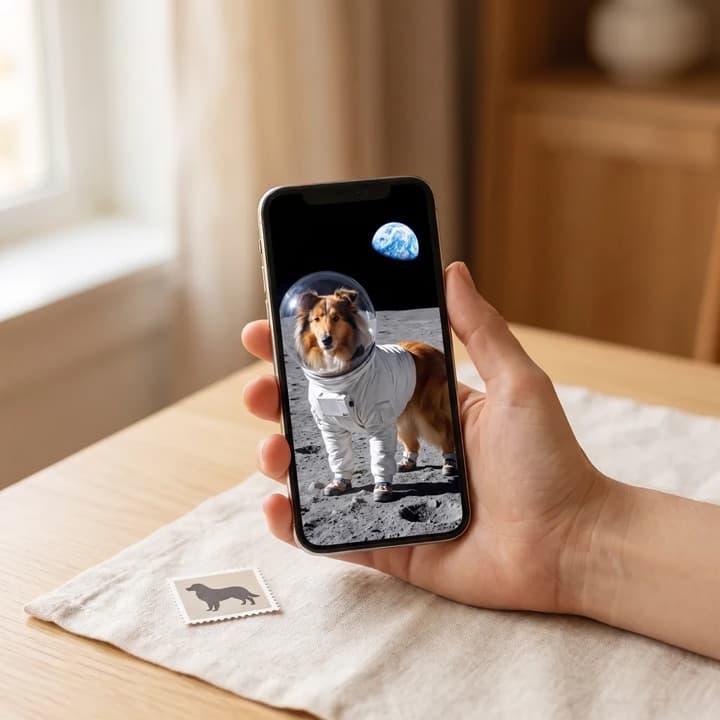 You get your first TimeWalkies postcard immediately!
 Then you get another one for free.
 If you like them, keep them coming every day for $99 for a whole year (about 27¢ per day, one‑off payment, no auto‑renewal).
2 free postcards. No credit card.
The story in 5 parts
A short version first. The full story, with every detail, is further down.
Part 1
How dogs served in ancient armies
The earliest written record of war dogs used in battle comes from the ancient Kingdom of Lydia, where the ruler Alyattes released dogs against Cimmerian cavalry around 600 BCE.
Part 2
Dogs as guards, gifts, and status symbols
Mastiffs are among the oldest recorded dog breeds, valued for size and strength in hunting, fighting, and guarding for thousands of years.
Part 3
Tracking dogs on the border
Bloodhounds were first imported to England around the time of the Norman Conquest in 1066, possibly by William the Conqueror himself.
Part 4
Dogs guarding ships and used in conquest
The French navy used dogs to guard naval installations, a practice that continued until 1770.
Part 5
From ad hoc use to organized military dogs
Historians describe the use of war dogs in the medieval and early modern West as a recurring but ad hoc, sporadic, and localized practice, quite distinct from the regular dog handling units established later.
Read the full story
Part 1
How dogs served in ancient armies
The earliest written record of war dogs used in battle comes from the ancient Kingdom of Lydia, where the ruler Alyattes released dogs against Cimmerian cavalry around 600 BCE. Around the same time, Magnesian troops released their hounds on enemy phalanxes before a cavalry charge. At the Battle of Pelusium in 525 BC, Cambyses II arrayed dogs and other animals sacred to the Egyptians in his front line as a psychological tactic. Julius Caesar wrote of facing Celtic warriors flanked by wolfhounds and mastiffs during his invasion of Britain, and the Roman army bred the Molossus specifically for combat. Your own dog's instinct to guard you has a very long history behind it.
Part 2
Dogs as guards, gifts, and status symbols
Mastiffs are among the oldest recorded dog breeds, valued for size and strength in hunting, fighting, and guarding for thousands of years. When the Normans introduced bull baiting to Britain in the twelfth century, they used mastiffs for the sport, long before the bulldog existed. Gifts of war dog breeding stock between European royalty were seen as suitable tokens for exchange throughout the Middle Ages. Emperor Maximilian reportedly kept 1,500 dogs, and in 1518 Henry VIII of England gave 400 battle mastiffs with iron collars to Charles V of Spain. In 1599 Elizabeth I sent the Earl of Essex to Ireland with an army that included a large force of bloodhounds. If you have ever watched your dog guard the door, you have seen a much older job in miniature.
Part 3
Tracking dogs on the border
Bloodhounds were first imported to England around the time of the Norman Conquest in 1066, possibly by William the Conqueror himself. Edward I later used bloodhounds along the Scottish border to track down raiders known as moss troopers. Robert the Bruce is said to have escaped these dogs only by wading down a stream to lose his scent. Long after, similar hounds ran down the Duke of Monmouth after the Battle of Sedgemoor in 1685.
Part 4
Dogs guarding ships and used in conquest
The French navy used dogs to guard naval installations, a practice that continued until 1770. From the fifteenth century, as European powers colonized new territory, dogs were also used as weapons and instruments of torture in warfare shaped by race. Spanish conquistadors used mastiffs and other large breeds against Native Americans in the 1500s. This part of the history is harder to read, but it is part of the record.
Part 5
From ad hoc use to organized military dogs
Historians describe the use of war dogs in the medieval and early modern West as a recurring but ad hoc, sporadic, and localized practice, quite distinct from the regular dog handling units established later. Those regular units were not set up until the late nineteenth century. The first official use of dogs for military purposes in the United States came during the Seminole Wars, and hounds were later used in the American Civil War to protect camps, send messages, and guard prisoners. By the First World War, dogs carried messages, stood guard, and helped find the wounded.
- Guarding camps and naval installations.
- Carrying messages between units.
- Serving as gifts exchanged between rulers.
Questions people ask
Did dogs actually fight in medieval battles?
Historians describe the use of war dogs in the medieval and early modern West as an ad hoc, sporadic, and localized practice rather than a regular, organized force.
What breeds were used as war dogs?
Mastiffs, one of the oldest recorded dog breeds, were used for hunting, fighting, and guarding for thousands of years. Bloodhounds were used for tracking, and the Roman army bred the Molossus specifically for combat.
When did organized military dog units begin?
Regular dog handling units, distinct from the earlier sporadic use of war dogs, were established in the late nineteenth century. The United States first used dogs officially for military purposes during the Seminole Wars.
Were dogs used to track people rather than fight?
Yes, bloodhounds were used by Edward I to track raiders known as moss troopers along the Scottish border. Robert the Bruce reportedly escaped these dogs only by wading down a stream to lose his scent.
Did dogs guard ships or naval sites?
The French navy used dogs to guard naval installations until the practice ended in 1770.
Your first 2 postcards are free, with no credit card. After that, it is $14.99 a month, or a one-time $99 Year Pass for 365 days. Give TimeWalkies as a gift.
Sources
- The Employment of War Dogs in the Medieval and Early Modern West | British Journal for Military History. journals.gold.ac.uk.
- Dogs in ancient Islamic culture. OUPblog, Jul 13, 2017.
- From Chariots to Chaucer: Mastiffs in Medieval England – Medieval Studies Research Blog: Meet us at the Crossroads of Everything. sites.nd.edu.
- Dogs in warfare - Wikipedia. en.wikipedia.org.
- Primary Sources » De Re Militari. deremilitari.org.
- When the Dog was a Soldier in Arms. thyra2005.blogspot.com.
- Beasts in Battle: 15 Amazing Animal Recruits in War. Live Science, Sep 26, 2017.
- Warrior War Dogs | eternal-soldier. eternal-soldier.
Written by TimeWalkies EditorialLast updated How we research