
Pug history: from Chinese imperial courts to European royalty
See the real story – guest starring your dog.
If you share your life with a pug, you may wonder how this snub-nosed little dog became a favorite of monks and monarchs. Pugs are among the oldest dog breeds known today, with roots that trace back to around 400 B.C. in China.
What is TimeWalkies?
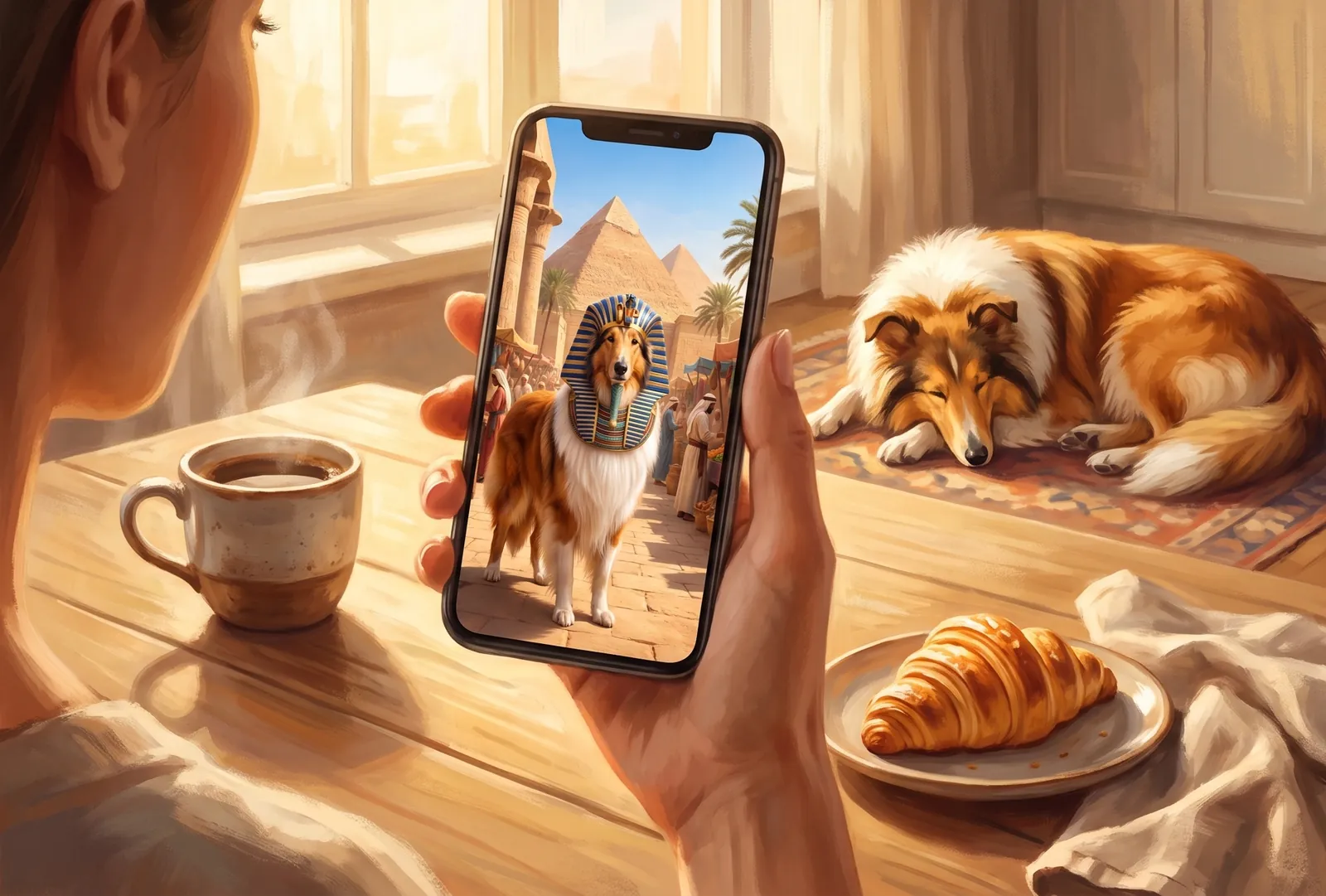
TimeWalkies paints your dog into a famous moment from history and sends it as a postcard. A new place and time every morning.
How TimeWalkies works
 Choose a photo of your dog.
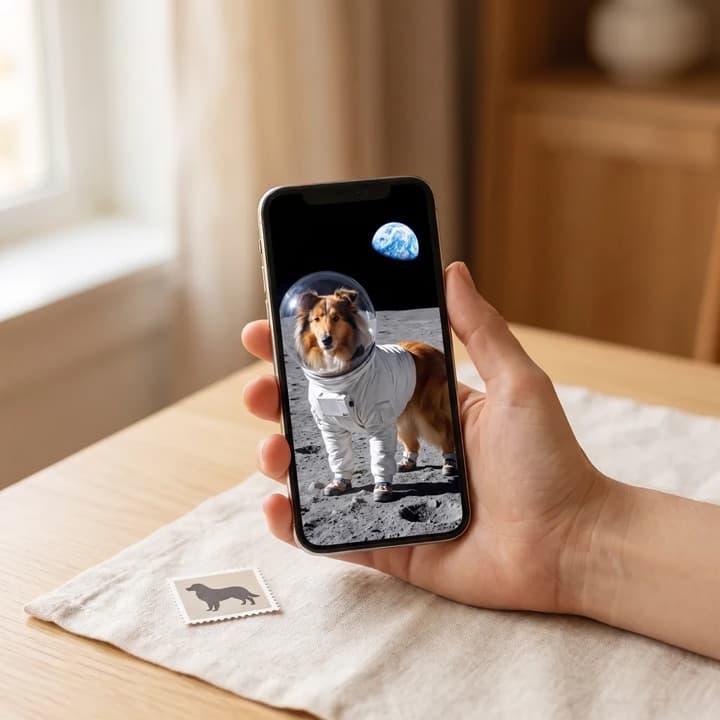 You get your first TimeWalkies postcard immediately!
 Then you get another one for free.
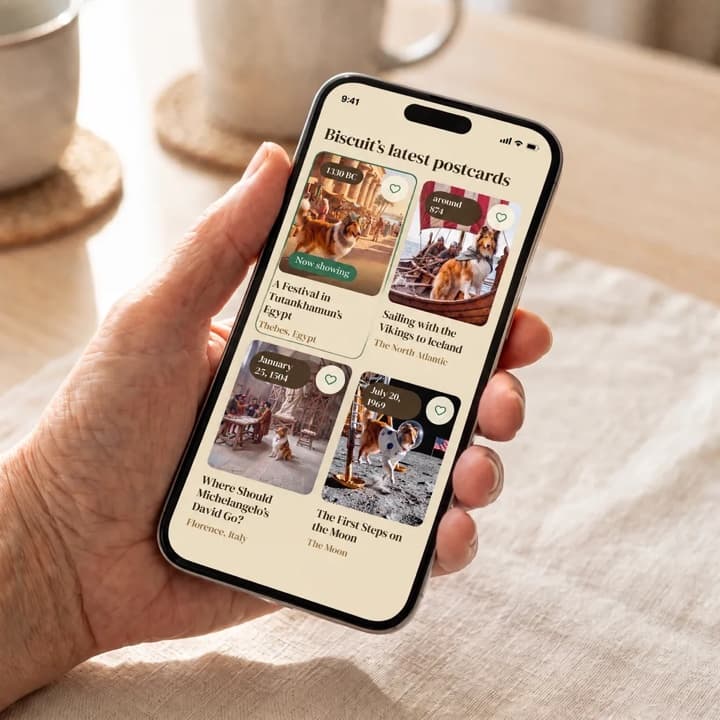 If you like them, keep them coming every day for $99 for a whole year (about 27¢ per day, one‑off payment, no auto‑renewal).
2 free postcards. No credit card.
The story in 6 parts
A short version first. The full story, with every detail, is further down.
Part 1
Where pugs first appear in the record
Pugs are an ancient breed, and most historians trace their origins to China, where they served as companions for the wealthy as far back as 400 B.C.
Part 2
How pugs reached Europe
Pugs reached Europe through trade, arriving in Holland with the help of the Dutch East India Company.
Part 3
Pugs and royal courts across Europe
The aunt of Catherine the Great kept pugs and even took them to church with her.
Part 4
The breed club era and the modern pug's face
Queen Victoria's interest in breeding pugs is credited with helping establish the Kennel Club in 1873.
Part 5
What the name and nicknames tell us
The most popular theory is that the name pug comes from marmoset monkeys, which were also called pug monkeys and were popular pets in the early 1700s.
Part 6
Pugs in art and popular culture
In 1740, a group of Roman Catholics formed a secret society called the Order of the Pug, using the dog as their symbol because pugs were seen as loyal and trustworthy.
Read the full story
Part 1
Where pugs first appear in the record
Pugs are an ancient breed, and most historians trace their origins to China, where they served as companions for the wealthy as far back as 400 B.C. Some accounts push the breed's roots even earlier, to around 700 B.C. during the time of Confucius, when the dogs were known as lo-sze. In China, an emperor of the Han dynasty is said to have brought pugs as tribute, and the Ming dynasty court also kept them as pets.
Tibetan Buddhist monks kept pugs in their monasteries, and Chinese emperors and their families kept them too. Only members of the imperial household were allowed to own these small-nosed dogs, and female pugs were said to hold the same rank as the emperor's wives. Breeders in China are said to have selected dogs for round heads, short snouts, and large eyes.
The pug's job in China was simply to be a companion. Some pugs even had guards and servants of their own to protect and care for them. If you have ever spoiled your own pug, this pampered history will sound familiar.
Part 2
How pugs reached Europe
Pugs reached Europe through trade, arriving in Holland with the help of the Dutch East India Company. From the Netherlands, the breed also spread to England and beyond. Once in Europe, pugs quickly became fashionable among aristocrats and royalty, who saw them as a symbol of high status.
William the Silent, Prince of Orange, had a dog named Pompey. According to the story, assassins crept toward the sleeping prince's tent one night in 1572, and Pompey barked, scratched, and finally jumped on his master's face to wake him in time. Different tellings place the event near Hermigny in France or during a siege of the period, and there is disagreement about whether Pompey was truly a pug or another small breed such as a Kooikerhondje. After this, the pug became known as the official dog of the House of Orange, and an effigy of William with his dog at his feet was carved on his tomb in Delft. When William III later became king of England alongside Mary II, their pugs reportedly wore ribbons to the coronation. If your own dog has ever woken you from a bad dream, you can appreciate why Pompey's story stuck.
Part 3
Pugs and royal courts across Europe
Catherine the Great's court and Napoleon's wife
The aunt of Catherine the Great kept pugs and even took them to church with her. Napoleon's wife, Josephine, had a pug named Fortune, who reportedly bit Napoleon on their wedding night.
Queen Victoria's fondness for the breed
Queen Victoria loved pugs. She is said to have kept as many as 36 pugs during her reign, with names such as Minka, Venus, Fatima, Olga, and Pedro. Her enthusiasm for the breed is credited with helping establish the Kennel Club in 1873.
Pugs in royal portraits and court fashion
Because of their place at court, pugs were painted by well-known artists of the period, including Goya, William Hogarth, and Reinagle.
Part 4
The breed club era and the modern pug's face
Queen Victoria's interest in breeding pugs is credited with helping establish the Kennel Club in 1873. The American Kennel Club recognized the pug in 1885. Pugs are a brachycephalic breed, meaning their short, flat noses can make breathing harder, especially in heat. Pugs can have breathing problems, especially in hot weather.
Part 5
What the name and nicknames tell us
The most popular theory is that the name pug comes from marmoset monkeys, which were also called pug monkeys and were popular pets in the early 1700s. Another theory traces the name to the Latin word pugnus, meaning fist. In the Netherlands, pugs were known as Mopshond, from a Dutch word meaning to grumble, which fits the breed's snuffling and talking sounds. In China, the breed was once called lo-sze, and in Japan pugs later became known as Pagu. If you have ever heard your own pug grumble, you know exactly what the Dutch name is getting at.
Part 6
Pugs in art and popular culture
In 1740, a group of Roman Catholics formed a secret society called the Order of the Pug, using the dog as their symbol because pugs were seen as loyal and trustworthy. Members reportedly had to wear a dog collar and scratch at the door to be initiated. The author Harriet Beecher Stowe later kept two pugs named Punch and Missy, and more recently the designer Valentino owned a pug named Oliver, after whom he named a clothing line. You do not need a secret society to enjoy your own pug's company, but it shows how far their popularity has traveled.
Things you might not know
- Tibetan Buddhist monks kept pugs in their monasteries, and Chinese emperors and their families kept them too.
- Once in Europe, pugs quickly became fashionable among aristocrats and royalty, who saw them as a symbol of high status.
- Pugs are a brachycephalic breed, meaning their short, flat noses can make breathing harder, especially in heat.
Year by year
- 1572Assassins crept toward the sleeping prince's tent one night in 1572, and Pompey barked, scratched, and finally jumped on his master's face to wake him in time.
- 1740In 1740, a group of Roman Catholics formed a secret society called the Order of the Pug, using the dog as their symbol because pugs were seen as loyal and trustworthy.
- 1873Her enthusiasm for the breed is credited with helping establish the Kennel Club in 1873.
- 1885The American Kennel Club recognized the pug in 1885.
Questions people ask
How old is the pug breed?
Pugs are considered one of the oldest dog breeds, with roots that trace back to around 400 B.C. in China, and some accounts push this even earlier.
Where do pugs originally come from?
Pugs originated in China, where they were bred as companions for the wealthy, including Buddhist monks and imperial households.
Why do pugs have wrinkled faces?
Chinese breeders are said to have purposely bred pugs to have a pattern of wrinkles on the forehead that resembled the Chinese character for prince.
Did royalty really keep pugs as pets?
Yes, royalty across Europe kept pugs, including William the Silent, Queen Victoria, and Napoleon's wife Josephine, who had a pug named Fortune.
What does the word pug mean?
The most popular theory is that the name comes from marmoset monkeys, once called pug monkeys, though another theory links it to the Latin word pugnus, meaning fist.
Your first 2 postcards are free, with no credit card. After that, it is $14.99 a month, or a one-time $99 Year Pass for 365 days. Give TimeWalkies as a gift.
Sources
- Pug History: From Emperors' Companions to Family Pets. American Kennel Club.
- Pompey (dog) - Wikipedia. en.wikipedia.org.
- Pug History-William the Silent and Pompey. urbanhounds-tubby5dog.blogspot.com.
- Pompey: The Dog Who Saved William the Silent's Life. dogs-in-history.blogspot.com.
- Pugs in Holland. mypugs.atwebpages.com.
- A Prince was saved from being assassinated thanks to a pug!. Emilio Cogliani, Aug 6, 2014.
- The Pug Breed – Loda's Pugs of many colors!. lodaspugs.com.
- Pug history: from ancient beginnings to their modern social media appeal. www.betterpet.com.
Written by TimeWalkies EditorialLast updated How we research