
Balto and Togo: the true story of the 1925 serum run to Nome
See Balto and Togo's real story – guest starring your dog.
Settle in with your dog while you learn about Balto and Togo, two sled dogs from Alaska's 1925 serum run to Nome. Togo, led by musher Leonhard Seppala, ran the longest and most dangerous section of the relay that carried diphtheria antitoxin toward the town. Balto led the final stretch into Nome and became the most famous dog of the story, with a statue that still stands in New York's Central Park. Togo's longer, harder run was left out of contemporary news coverage at the time.
What is TimeWalkies?
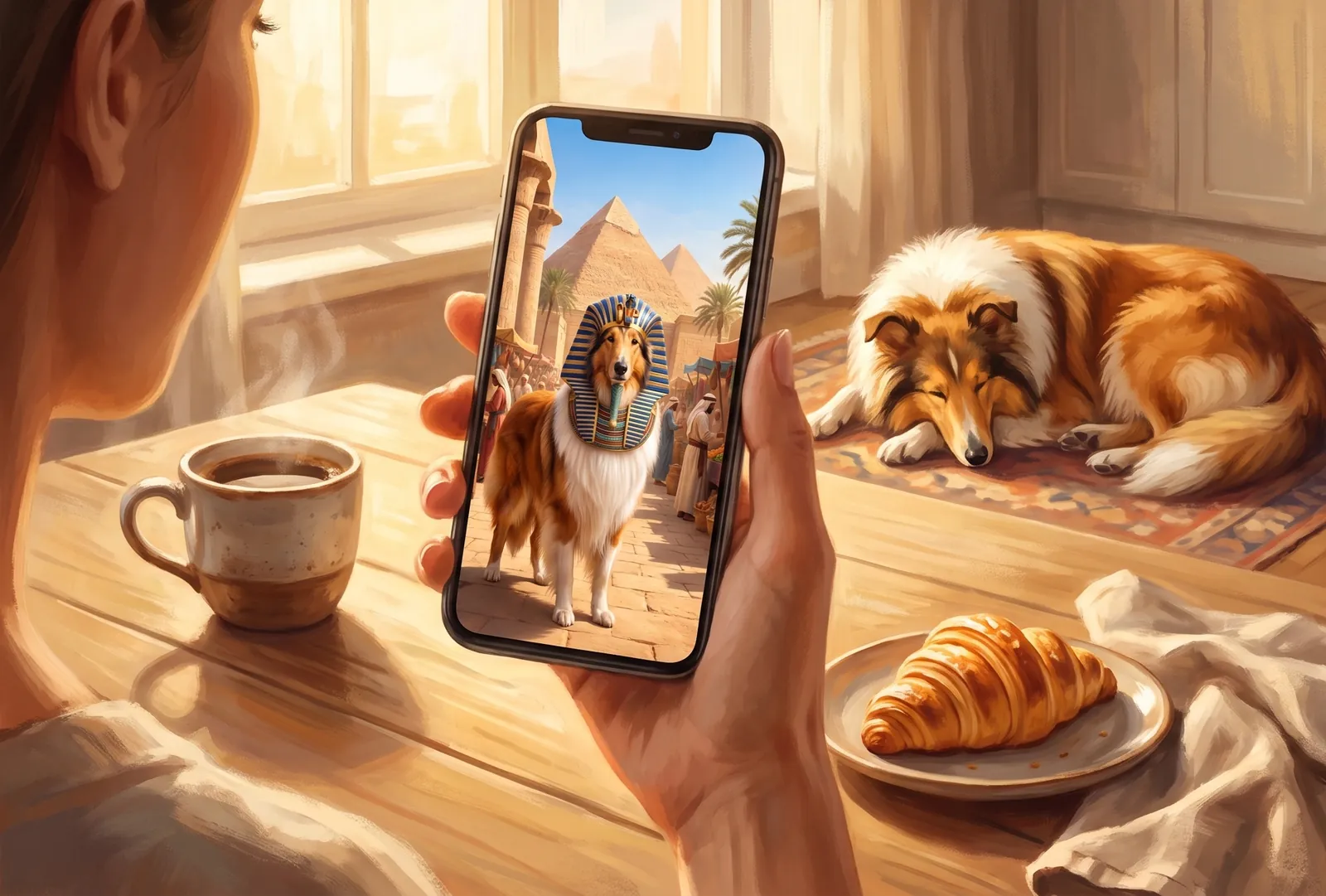
TimeWalkies paints your dog into a famous moment from history and sends it as a postcard. A new place and time every morning.
How TimeWalkies works
 Choose a photo of your dog.
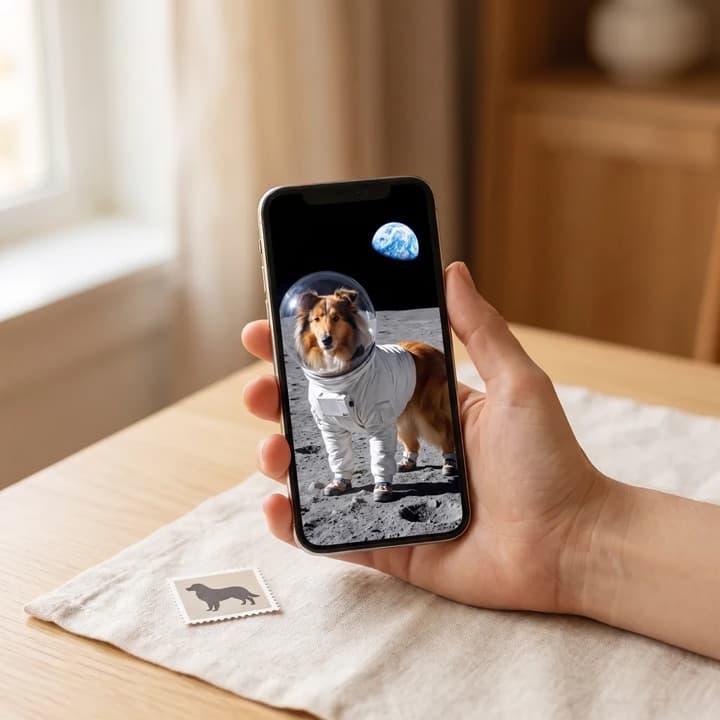 You get your first TimeWalkies postcard immediately!
 Then you get another one for free.
 If you like them, keep them coming every day for $99 for a whole year (about 27¢ per day, one‑off payment, no auto‑renewal).
2 free postcards. No credit card.
The story in 6 parts
A short version first. The full story, with every detail, is further down.
Part 1
What happened during the 1925 serum run
In January 1925, Nome's only doctor, Curtis Welch, found that children in the town were dying of diphtheria, a contagious infection that can choke off a patient's airway.
Part 2
Togo's leg of the relay
The 630-mile round trip from Nome to Nulato and back went to Leonhard Seppala, a Norwegian musher, and his lead dog Togo, who was twelve years old at the time.
Part 3
Balto's final leg and the fame that followed
The last stretch into Nome went to musher Gunnar Kaasen, who chose Balto to lead his team for that final run.
Part 4
Why Togo was overlooked for decades
Seppala was upset that the press gave Togo's achievements to Balto, since Togo and Seppala had covered the longest and most dangerous stretch of the whole trail.
Part 5
What breed were Balto and Togo
These Siberian dogs were smaller than the Alaskan malamutes that had long been the traditional sled dogs, yet Seppala found they had real strength and resilience over long distances.
Part 6
What happened to Balto and Togo after 1925
After the run, Seppala took Togo and his team on a tour across the United States, drawing large crowds and appearing at Madison Square Garden in New York.
Read the full story
Part 1
What happened during the 1925 serum run
In January 1925, Nome's only doctor, Curtis Welch, found that children in the town were dying of diphtheria, a contagious infection that can choke off a patient's airway. The hospital's only stock of antitoxin had expired, and the port had frozen shut for winter, so no new serum could arrive by ship until spring. Welch and the town council set a quarantine and sent telegrams alerting other major towns in Alaska.
Officials first considered flying the serum in, but ruled it out because the open-cockpit planes available in Alaska in 1925 were unreliable in such extreme cold. Instead, they organized a relay of twenty mushers and about one hundred and fifty dogs to carry the antitoxin the six hundred and seventy four miles from the railhead at Nenana to Nome. You can imagine how your own dog would handle days of that kind of cold, let alone the miles these teams covered.
The trail crossed several mountain ranges, and Nenana reached fifty degrees below zero the night the relay began. The whole relay, from Nenana to Nome, was completed in about five and a half days.
Part 2
Togo's leg of the relay
The 630-mile round trip from Nome to Nulato and back went to Leonhard Seppala, a Norwegian musher, and his lead dog Togo, who was twelve years old at the time.
Togo's team had to cross the frozen Norton Sound, an inlet of the Bering Sea where shifting ice could open into channels of freezing water without warning. Togo is reported to have swerved his team away from one such opening in the ice, keeping them from breaking through. If your own dog has ever pulled you back from something you hadn't noticed yet, you know the kind of instinct that made Togo valuable on the trail.
- Togo's team covered 261 miles of the relay route, more than any other team.
- Balto's team covered 55 miles on the final stretch into Nome.
- The other teams in the relay covered about 31 miles each on average.
Part 3
Balto's final leg and the fame that followed
The last stretch into Nome went to musher Gunnar Kaasen, who chose Balto to lead his team for that final run. Kaasen and Balto carried the serum the rest of the way into Nome, finishing the relay that had begun in Nenana.
Balto became the most famous dog of the era after Rin Tin Tin, and his statue stands in New York's Central Park. A statue of Balto was unveiled in New York's Central Park in 1925, sculpted by Frederick Roth, and Balto himself attended the unveiling. Ask any dog owner, and they will tell you that fame can land on the dog who happens to finish, not always the one who worked hardest.
Part 4
Why Togo was overlooked for decades
Seppala was upset that the press gave Togo's achievements to Balto, since Togo and Seppala had covered the longest and most dangerous stretch of the whole trail.
Recognition for Togo came much later than for Balto. In 2001, Togo received his own statue, placed in New York's Seward Park. His story was retold in a 2019 film.
Part 5
What breed were Balto and Togo
These Siberian dogs were smaller than the Alaskan malamutes that had long been the traditional sled dogs, yet Seppala found they had real strength and resilience over long distances. Togo himself grew to about forty eight pounds as an adult, with a dark coat of black, brown, and grey.
Mushers of the time described the breed's ability to sense danger and adapt to changing conditions as a kind of adaptive intelligence.
Part 6
What happened to Balto and Togo after 1925
After the run, Seppala took Togo and his team on a tour across the United States, drawing large crowds and appearing at Madison Square Garden in New York. Togo died on December 5, 1929, at around sixteen years old. His body was preserved and mounted, and is displayed at the Iditarod Trail Headquarters Museum in Wasilla, Alaska, while his skeleton is kept at the Peabody Museum of Natural History.
Balto's life after the run had its own ups and downs. That contrast between hard work and public fame is something you may still recognize today.
Questions people ask
Was Balto or Togo the real hero of the serum run?
Togo and Leonhard Seppala covered the longest and most dangerous stretch of the route, including a crossing of the frozen Norton Sound, while Balto led only the final, shorter leg into Nome.
How far did Togo actually run compared to Balto?
Togo's team covered 261 miles of the relay, while Balto's team covered 55 miles on the final stretch into Nome. The other teams in the relay covered about 31 miles each on average.
Are Balto and Togo related to modern Iditarod dogs?
Togo's descendants contributed to the Seppala Siberian sleddog line and to the wider Siberian Husky gene pool used today.
Why is there a statue of Balto but not Togo in Central Park?
Balto received most of the press attention, and a statue of him was unveiled in Central Park in 1925. Togo's own statue did not come until 2001, and it stands in New York's Seward Park rather than Central Park.
What happened to Balto's body after he died?
Balto's life after the serum run had its own ups and downs.
Your first 2 postcards are free, with no credit card. After that, it is $14.99 a month, or a one-time $99 Year Pass for 365 days. Give TimeWalkies as a gift.
Sources
- 1925 serum run to Nome - Wikipedia. en.wikipedia.org.
- Togo (dog) - Wikipedia. en.wikipedia.org.
- The 1925 Serum Run to Nome | Alaska Mushing School. Alaska Mushing School.
- 10 Things You Need to Know About the 1925 Serum Run to Nome, Alaska. Mental Floss, Jan 24, 2025.
- Leonhard Seppala’s Serum Run. Northern Light Media, Oct 1, 2015.
- The True Story of Togo: Siberian Husky Sled Dog Hero of 1925 Nome Serum Run. American Kennel Club.
- Togo--Nome Serum Run of 1925. circusnospin.blogspot.com.
- When deadly disease gripped an Alaskan town, a dog saved the day—but history hailed another. Premium.
- 1925 serum run to Nome - Alchetron, The Free Social Encyclopedia. Alchetron.com, Aug 18, 2017.
- From Alaska to Central Park: Balto the Siberian Husky. Central Park Conservancy.
Written by TimeWalkies EditorialLast updated How we research