
Custom dog portraits: styles, history, and what to expect
See the real story – guest starring your dog.
You choose the style, from a realistic oil painting to a cartoon or a costume scene, and an artist or a service turns your photo into that piece. This guide walks you through the styles, the history behind them, and what a portrait usually costs and takes to finish.
What is TimeWalkies?
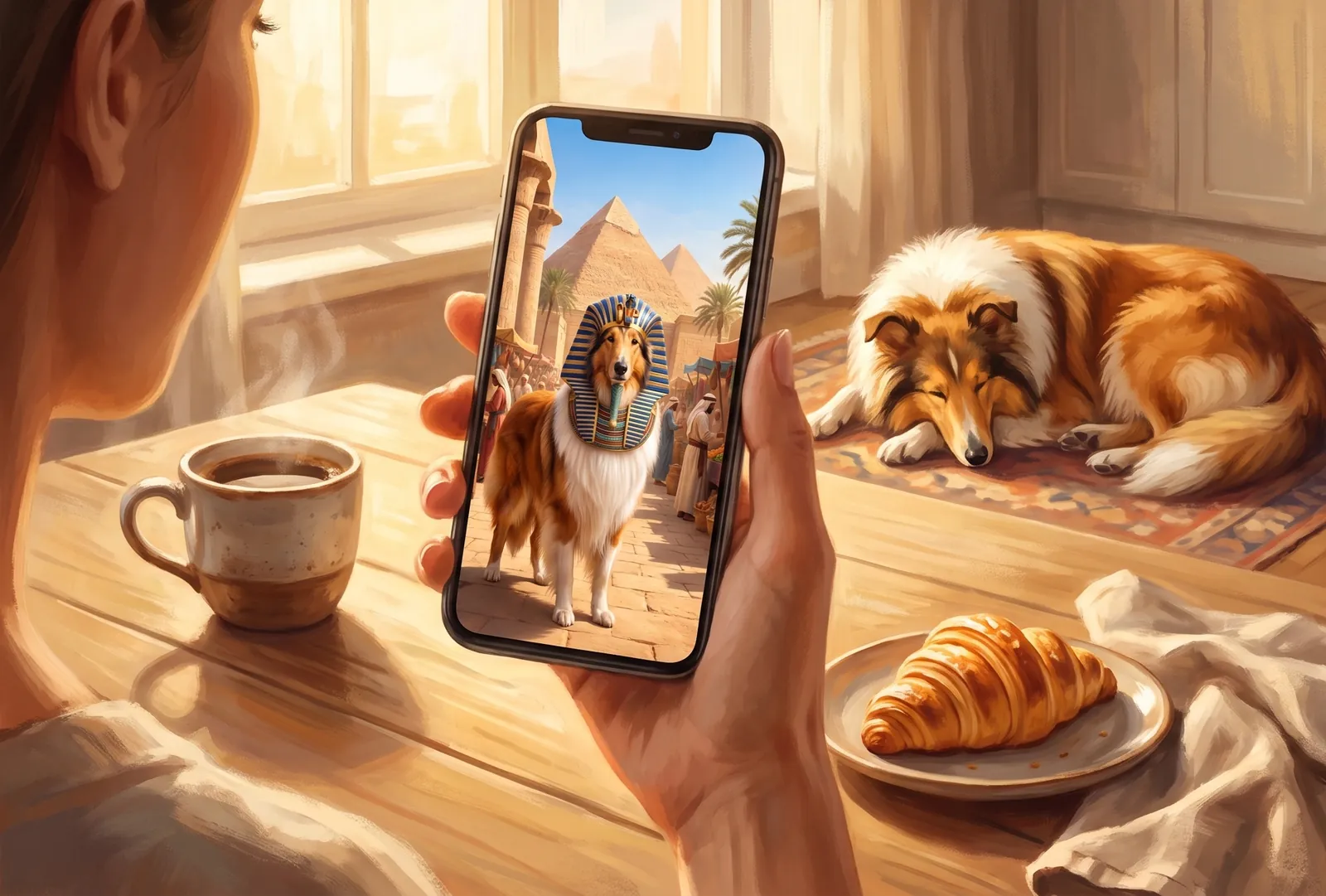
TimeWalkies paints your dog into a famous moment from history and sends it as a postcard. A new place and time every morning.
How TimeWalkies works
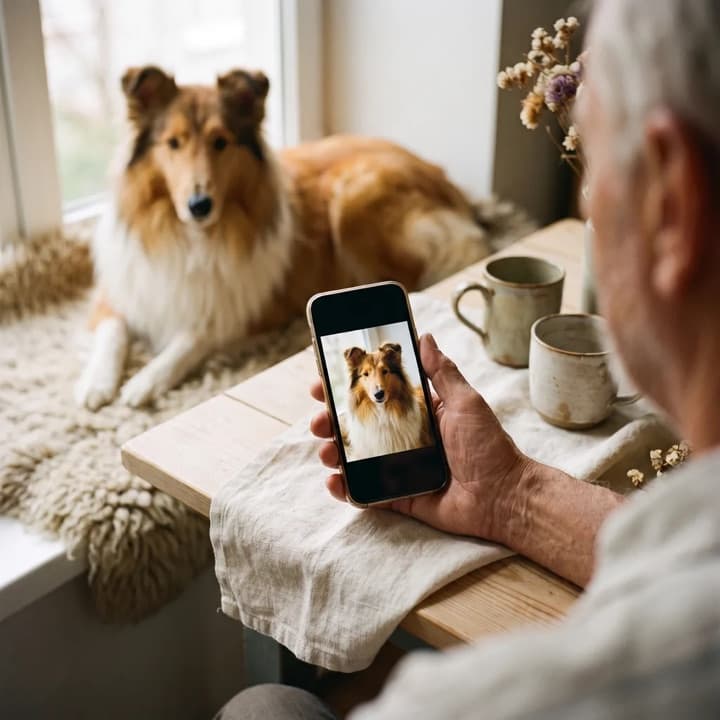 Choose a photo of your dog.
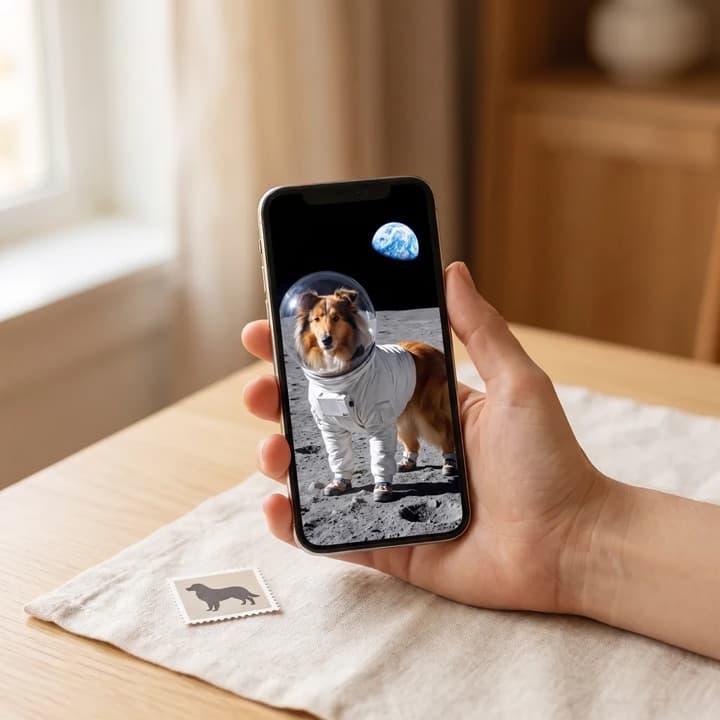 You get your first TimeWalkies postcard immediately!
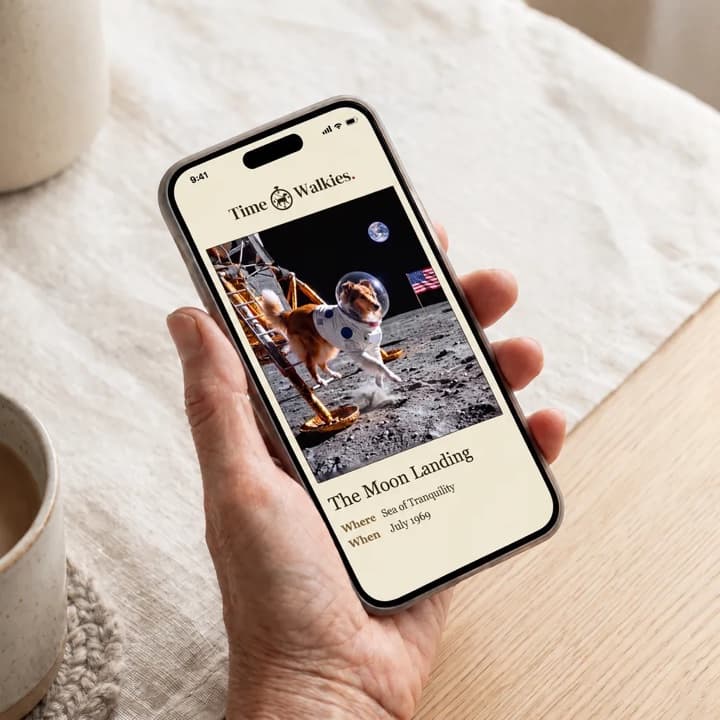 Then you get another one for free.
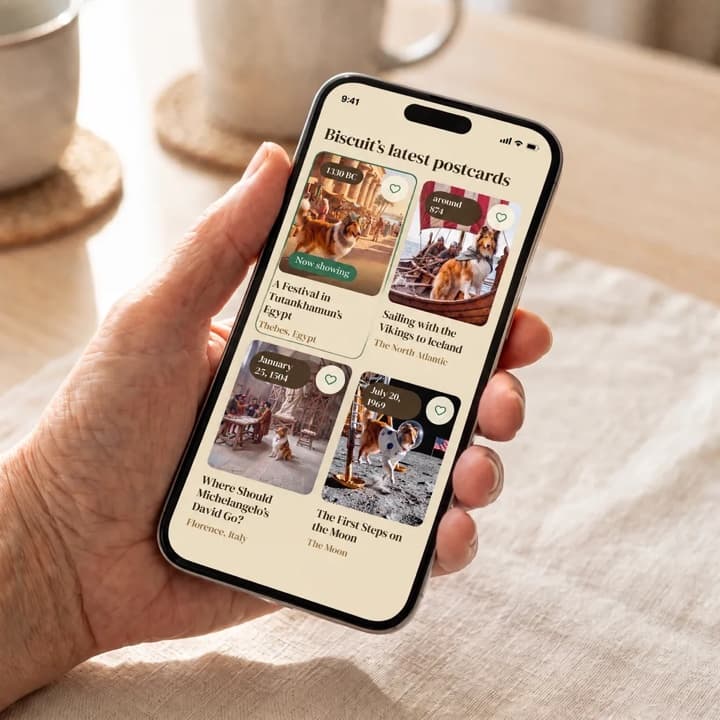 If you like them, keep them coming every day for $99 for a whole year (about 27¢ per day, one‑off payment, no auto‑renewal).
2 free postcards. No credit card.
The story in 6 parts
A short version first. The full story, with every detail, is further down.
Part 1
What counts as a custom dog portrait today
Because of that range, you can spend as little as thirty dollars on a digital portrait or several hundred dollars on a hand-painted canvas.
Part 2
How dog portraiture began and changed
In the seventeenth and eighteenth centuries, European aristocrats commissioned oil paintings of their dogs alongside themselves, often to signal wealth and status.
Part 3
Popular styles to choose from
Cartoon is another style some artists offer.
Part 4
What makes a good source photo
One artist asks you to send several clear photos of your dog before starting.
Part 5
What to expect for price and timeline
Prices can vary widely depending on the artist, the materials, the size, and whether the portrait is digital or hand painted.
Part 6
Choosing between an artist, a studio, or an automated service
An individual artist working by hand can customize your portrait, such as removing a collar or adding a background.
Read the full story
Part 1
What counts as a custom dog portrait today
Because of that range, you can spend as little as thirty dollars on a digital portrait or several hundred dollars on a hand-painted canvas.
Part 2
How dog portraiture began and changed
In the seventeenth and eighteenth centuries, European aristocrats commissioned oil paintings of their dogs alongside themselves, often to signal wealth and status. The painter Thomas Gainsborough painted patrons with their dogs, including Mr Andrews in 1750 and William Lowndes in 1771. Other painters of the period also placed dogs beside their owners, often as symbols of loyalty and domesticity. By the Victorian era, pets were regularly photographed and seen as members of the family. Sir Edwin Landseer became known in this period for his realistic, life-like dog portraits, which helped popularise the practice of pet portraiture.
In the twentieth century, advances in photography and printing made pet portraits available to far more people, not just the wealthy. More recently, digital art and online platforms have made it easier to commission a personalized portrait of your dog.
Part 3
Popular styles to choose from
- Cartoon is another style some artists offer.
- Royal or costume-themed portraits dress your dog as nobility, a style with roots in Renaissance paintings of nobles' dogs.
- Silhouette designs are another option some artists offer.
Part 4
What makes a good source photo
One artist asks you to send several clear photos of your dog before starting. A close, well-lit shot that shows your dog's eyes clearly gives an artist the most to work with. Blurry, dark, or heavily shadowed photos make it hard for an artist to render fur texture and expression accurately. A plain, uncluttered background also helps, since it keeps the focus on your dog rather than on other objects in the shot. One artist confirms she can work from your photos and asks you to approve a cropped reference image before you place your order.
Part 5
What to expect for price and timeline
Prices can vary widely depending on the artist, the materials, the size, and whether the portrait is digital or hand painted. Digital or AI-generated portraits often run from about thirty to one hundred fifty dollars. Hand-painted portraits typically cost more, often between one hundred fifty and over one thousand dollars, with an eleven-by-fourteen-inch hand-painted piece commonly falling between two hundred fifty and four hundred dollars. One painter's price chart lists an eight-by-ten head portrait at around three hundred dollars and a full-body portrait at the same size at around four hundred dollars, with larger sizes costing more. Pet portrait drawings can run from about fifty to five hundred dollars, depending on size and detail.
One studio aims to complete a piece within two to three working days. Before you order, ask when payment is due, since some artists ask for a deposit up front with the balance due on completion.
Part 6
Choosing between an artist, a studio, or an automated service
An individual artist working by hand can customize your portrait, such as removing a collar or adding a background. An automated or AI-based service can produce a portrait at a lower price, though the result is generated by software rather than painted by a person. Before you commission anyone, look at their past work and reviews to see whether their style suits what you want. Checking a gallery of finished portraits, rather than just marketing images, gives you a better sense of what your own dog's portrait might look like. If you want your dog painted in a royal costume, you are following a tradition that traces back to Renaissance portraits of nobles and their dogs.
Questions people ask
How much does a custom dog portrait usually cost?
Prices range from about thirty dollars for a digital or AI-generated portrait up to over a thousand dollars for a large hand-painted canvas. A common hand-painted size, eleven by fourteen inches, often costs between two hundred fifty and four hundred dollars.
How long does it take to get a custom dog portrait made?
Some studios finish a portrait within two to three working days. A hand-painted commission from an individual artist involves sending photos and approving a final image before the portrait is complete.
Can you get a custom portrait from just a phone photo?
Yes, many services and apps let you upload a phone photo and turn it into a portrait. Artists still recommend sending several clear photos so they have enough detail to work from.
What is the difference between a custom portrait and a printed photo?
A custom portrait can be made in different styles, from a traditional oil painting to a modern watercolor or a playful cartoon.
Why did painted pet portraits become popular in the first place?
Aristocrats began commissioning portraits of their dogs partly to display wealth and status. Pet keeping and pet art became more common after the Renaissance, once earlier religious objections to keeping animals for companionship eased.
Your first 2 postcards are free, with no credit card. After that, it is $14.99 a month, or a one-time $99 Year Pass for 365 days. Give TimeWalkies as a gift.
Sources
- Historical portraits of people and their pets. Dance's Historical Miscellany, May 5, 2018.
- Pet Portraiture. Victorian Visual Culture, Dec 13, 2014.
- The Evolution of Pet Portraits: From Royalty to Modern Homes. Pet Portraits.
- The History of Animal Portraits. Hancock Gallery.
- Renaissance Painting at the Louvre with Dogs: Unearthing Canine Companions in Masterpieces - Wonderful Museums. Wonderful Museums, Sep 18, 2026.
- The History of Pet Art | Sophie Ella Fine Art | Pet Portrait and Wildlife Artist. Sophie Ella Fine Art.
- The History of Pet Portraits: From Ancient Egypt to AI Art (5,000 Years). PawFav AI, Apr 9, 2026.
- Pricing for Commissioned Pet Portraits. Christman Pet Portraits.
- How Much Do Custom Pet Paintings Cost?. Krystle Cole Fine Art.
- How Much Does A Custom Pet Portrait Drawing Cost?. JoyousJoyfulJoyness.
Written by TimeWalkies EditorialLast updated How we research