
Your dog in history: how dogs have appeared through the ages
See the real story – guest starring your dog.
Dogs have appeared in art for thousands of years, and some, like Sergeant Stubby, took part in real, documented events. One example is Sergeant Stubby, a stray dog who served with American troops in World War One and became one of the most decorated dogs of that war. Reading on can help you picture where your own dog might fit into that history.
What is TimeWalkies?
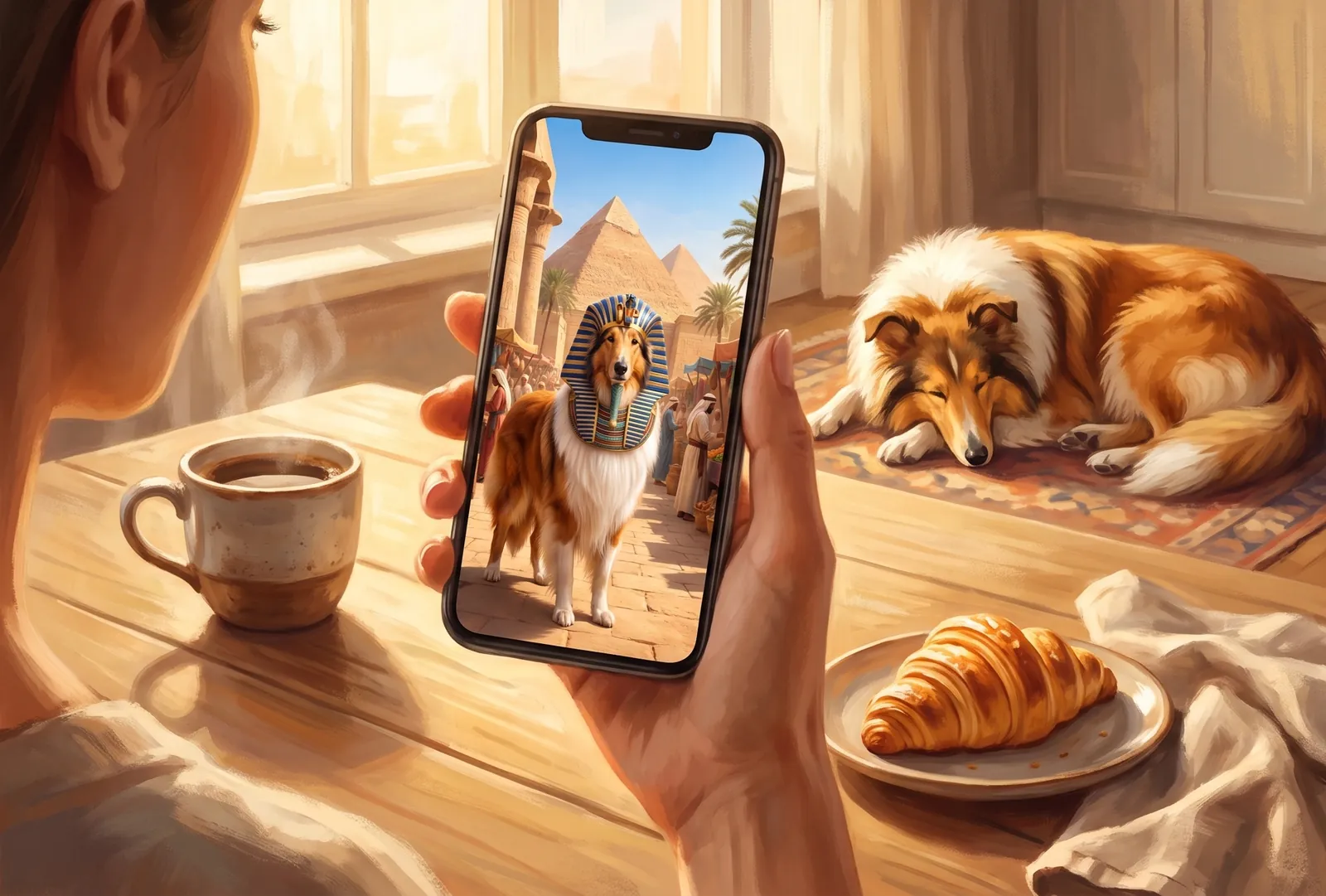
TimeWalkies paints your dog into a famous moment from history and sends it as a postcard. A new place and time every morning.
How TimeWalkies works
 Choose a photo of your dog.
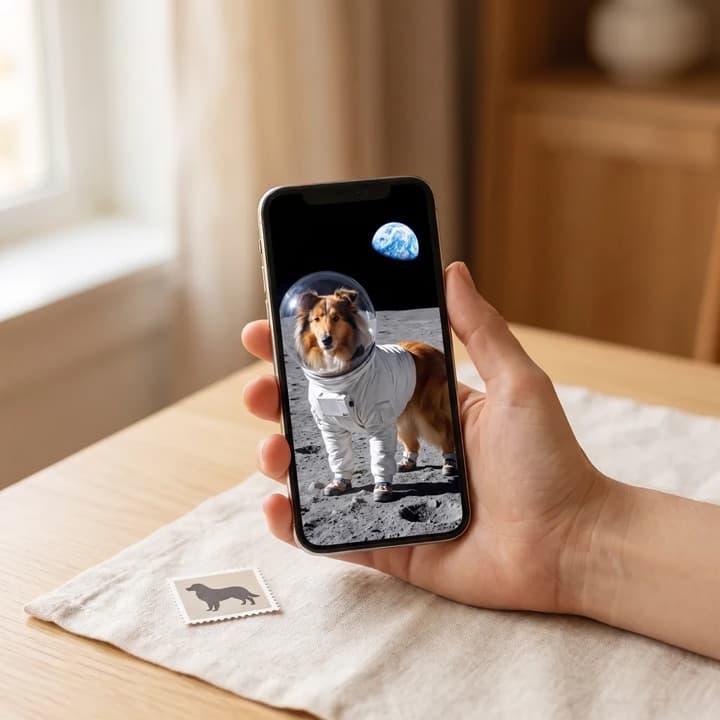 You get your first TimeWalkies postcard immediately!
 Then you get another one for free.
 If you like them, keep them coming every day for $99 for a whole year (about 27¢ per day, one‑off payment, no auto‑renewal).
2 free postcards. No credit card.
The story in 4 parts
A short version first. The full story, with every detail, is further down.
Part 1
Dogs who witnessed real historical moments
One dog, Sergeant Stubby, was actually present at real historical events during World War One.
Part 2
How artists and historians have recorded dogs over time
Dogs have shown up in art for a very long time, starting with petroglyph carvings made about 8,000 years ago.
Part 3
Why people like connecting their dog to a bigger story
You might feel drawn to imagining your dog inside a bigger story, and that pull is not new.
Part 4
Choosing a historical moment that fits your dog
If you want to picture your dog inside a historical setting, start with what is actually documented, since only some moments and dogs have detailed records behind them.
Read the full story
Part 1
Dogs who witnessed real historical moments
One dog, Sergeant Stubby, was actually present at real historical events during World War One. Sergeant Stubby, a stray dog found by soldiers training in Connecticut in 1917, crossed the Atlantic with the 102nd Infantry Regiment and served on the Western Front during World War One. He took part in seventeen battles over eighteen months, was wounded by shrapnel, and was affected by mustard gas. After the war he marched in parades, met American presidents, and received a gold medal from the Humane Education Society. His body is preserved and displayed today at the National Museum of American History in Washington, D.C.
- He warned his unit of incoming mustard gas attacks by running through the trenches barking and biting at sleeping soldiers.
- He located wounded soldiers between the trenches and stayed with them or led medics to their position.
- He received a wound stripe and two Purple Hearts for his injuries.
Part 2
How artists and historians have recorded dogs over time
From ancient carvings to painted vases
Dogs have shown up in art for a very long time, starting with petroglyph carvings made about 8,000 years ago. In ancient Greece, dogs appeared often on coins, sculptures, and painted vases, usually shown as hunting companions or playful animals. In ancient west Mexico, communities such as Colima made ceramic sculptures of hairless dogs and placed them in burial tombs alongside the dead.
Symbols before individual dogs
Medieval writers described dogs healing their own wounds by licking them, and used dogs to represent loyalty, protection of the home, and faithfulness in marriage. Some medieval texts also used dogs to represent human faults, such as envy or hypocrisy, showing the same animal could stand for very different ideas depending on the story. Albrecht Dürer's 1514 print Melencolia I includes a thin, sad dog tied to the idea of melancholy at the time, though the exact meaning of the dog is still debated.
Part 3
Why people like connecting their dog to a bigger story
You might feel drawn to imagining your dog inside a bigger story, and that pull is not new. Connecting your dog to a documented event, such as Sergeant Stubby's service, or to a wider tradition of dogs in art can make an ordinary companion feel part of something larger. This is different from simply keeping a daily photo of your dog, since it ties your dog to a specific moment, era, or artistic tradition rather than to your everyday routine. Talking about your dog's place in a bigger story can also be a simple way to enjoy history alongside a companion you already love.
Part 4
Choosing a historical moment that fits your dog
If you want to picture your dog inside a historical setting, start with what is actually documented, since only some moments and dogs have detailed records behind them. War dogs like Sergeant Stubby are tied to a specific, well documented setting: training camps and trenches on the Western Front during World War One. Other dogs appear more often in symbolic medieval art, shown at the feet or on the lap of their owner as a sign of loyalty. Whichever moment you choose, it helps to keep the details grounded in what is actually recorded about dogs from that time, rather than guessing at specifics.
Questions people ask
How do historians know which dogs were real versus symbolic in old paintings?
Some dogs in old art, like the sad dog in Albrecht Dürer's Melencolia I, carried symbolic meaning tied to ideas such as melancholy, and their exact meaning is still debated among historians. Other dogs, described in medieval bestiaries and carved as gargoyles, stood for ideas like loyalty or faithfulness rather than representing one real animal.
Can any dog breed be placed into any historical era accurately?
Sergeant Stubby is one dog whose service in World War One was documented in detail. For eras or breeds without that kind of record, it is best to keep details general rather than invent specifics.
What is the earliest recorded dog in written history?
The earliest recorded images of dogs in art history include petroglyph carvings made about 8,000 years ago. Dog remains have also been found alongside humans in ancient burial sites, showing how far back the bond between people and dogs goes.
Your first 2 postcards are free, with no credit card. After that, it is $14.99 a month, or a one-time $99 Year Pass for 365 days. Give TimeWalkies as a gift.
Sources
- Unleashed: Dogs in Art | The Art Institute of Chicago. The Art Institute of Chicago.
- Sergeant Stubby - Wikipedia. en.wikipedia.org.
- The Price of Freedom: Americans at War - Stubby. National WWI Museum and Memorial.
- A True Dog of War: Sergeant Stubby - Connecticut History | a CTHumanities Project. Connecticut History | a CTHumanities Project - Stories about the people, traditions, innovations, and events that make up Connecticut's rich history., Nov 12, 2021.
- Sergeant Stubby: Famous WWI Canine Hero. GenealogyBank Blog, May 19, 2026.
- Sergeant Stubby: America’s First War Dog | Dogs in History. Dogs in History.
- Stubby's story: All about the iconic World War I 'war dog' ... and star of an upcoming animated film. Military Times, Jun 7, 2017.
- Gargoyles Shaped Like Dogs: Symbolism and Representation. Gárgolas - Dolores Herrero, Aug 22, 2023.
Written by TimeWalkies EditorialLast updated How we research